← Transfusion Surprises

TRANSFUSION SURPRISES...THE ONES YOU NEVER EXPECT

Allan Dubon, MLS

THE ONE THAT ALMOST GOT AWAY

A routine appointment, a number nobody was looking for.

TRANSFUSION SURPRISES... — THE ONES YOU NEVER EXPECT

Allan Dubon, MLS

This is a presentation about transfusion medicine. It is not, in the end, a presentation about antibody identification.

It is about what laboratory professionals do when a result, a history, a patient, a process, a clinical situation, or a body of evidence does not fit the expected answer.
58,000 /µL

MONDAY

A routine diabetes appointment. A physician who needed a hemoglobin and hematocrit, and asked whether the annual laboratory work had been done yet. It had not, so she ordered the broader panel.

A few hours later she called with bad news. The expectation was an A1C. What she said instead was: your white count is 58,000.

THE ONE THAT ALMOST GOT AWAY.

THE ONE THAT ALMOST GOT AWAY.

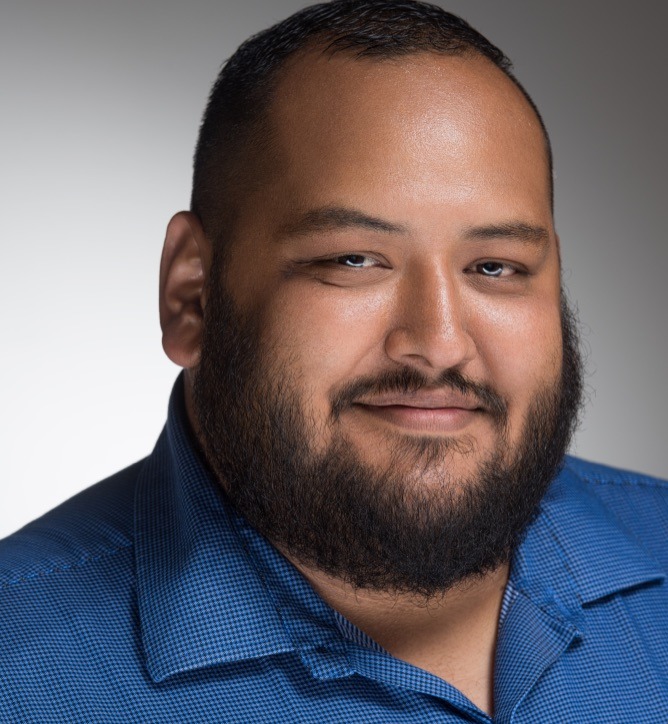
Allan, professional headshot taken during his leukemia treatment

MINE.

THE WEEK

“That one almost got away.”

MONDAY

  • WBC 58,000 /µL

TUESDAY

  • Cancer specialist

THURSDAY

  • Admitted to Huntsman Cancer Institute
  • WBC in the 70,000s /µL

MARCH 11, 2020

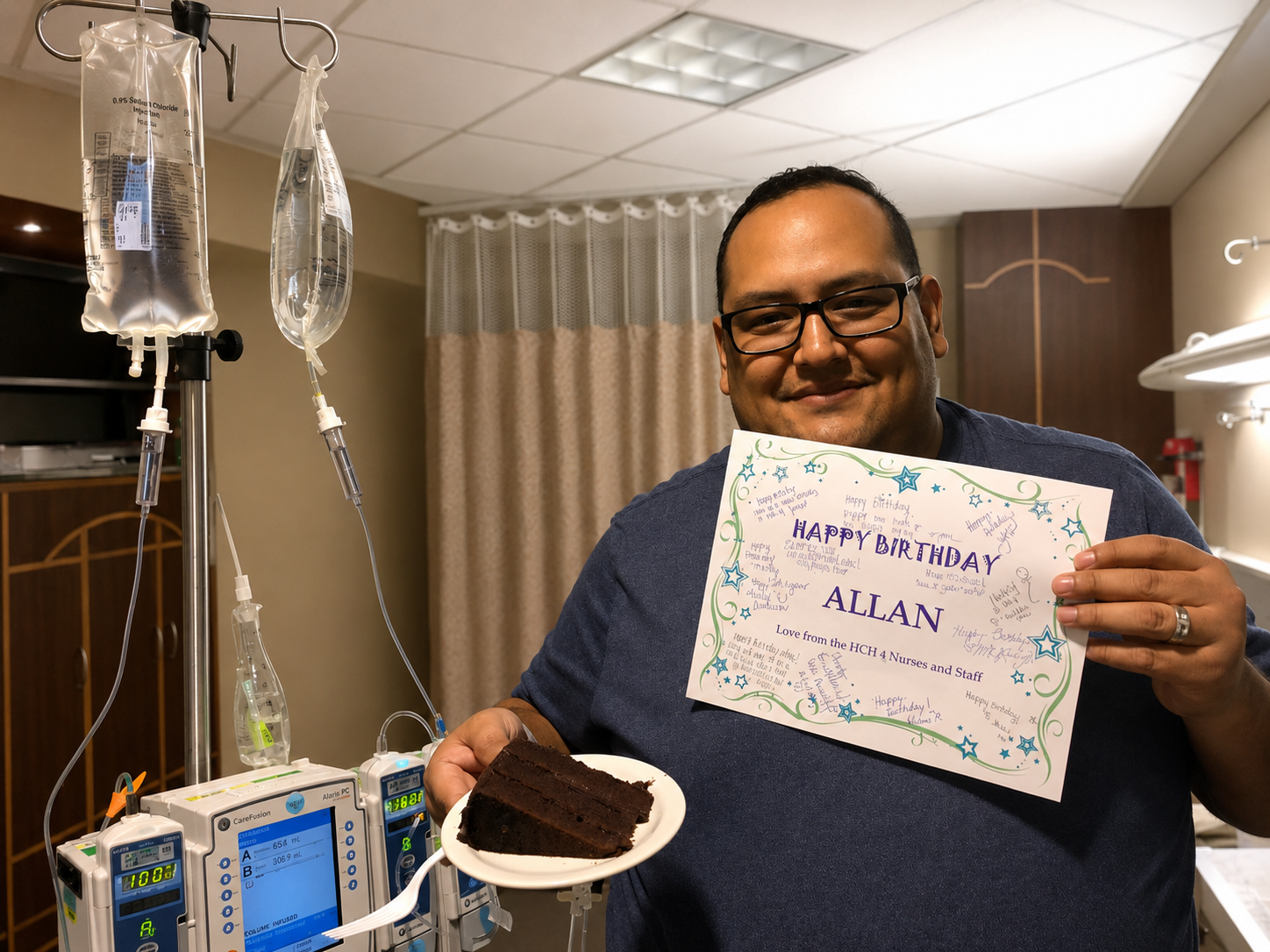
Allan holding a Happy Birthday sign while connected to chemotherapy infusions in the hospital

Consistent with B lymphoblastic leukemia/lymphoma

Interpretation

  • Flow cytometry: ~69% atypical B-lineage lymphoblasts
  • Immunophenotype: CD19+ · CD34+ · TdT+ · HLA-DR+

WHAT AM I MISSING?

The dangerous cases are not always the ones where nobody knows the answer. Sometimes they are the ones where we think we know enough.

GO WITH WHAT YOU KNOW

Michelle's rule, and what blood banking did to it.

GO WITH WHAT YOU KNOW.

— Michelle Dubon

When something doesn't fit,

go back to the last thing you KNOW is correct.

The phrase belongs to my wife, Michelle Dubon. She used it while I was going through college, and she meant something simple: trust what you have learned, and don't overthink yourself out of the answer you already know is right.

Blood banking gave it a second meaning. When something in an investigation stops making sense, do not force the evidence to fit the conclusion. Stop. Go back to the last thing you know is correct. Then work forward again.

WHAT THIS HOUR IS FOR

THIS HOUR

INVESTIGATE

  • Unexpected pretransfusion results

EVALUATE

  • Safety when process, urgency and people collide

CHALLENGE

  • How evidence applies to the patient in front of us

THE BABY I NEVER FORGOT

HDFN, RhIG, and what routine really means.

“SHE REFUSED THE RhIG.”

CASE BACKGROUND

MOTHER

  • RhD-negative
  • Multiple pregnancies
  • RhIG had been declined

SEROLOGY

  • Maternal anti-D developed

INFANT

  • Significant hemolytic disease of the fetus/newborn
  • Required exchange transfusion

WORK BACKWARD

  • EXCHANGE TRANSFUSION
  • HDFN
  • MATERNAL IgG ANTI-D
  • RhD ALLOIMMUNIZATION
  • EXPOSURE TO RhD-POSITIVE FETAL RBCs
  • PREVENTION OPPORTUNITY

WHAT THIS ESTABLISHES

SENSITIZATION

  • RhD-negative individuals can become alloimmunized following exposure to RhD-positive RBCs.

TRANSFER

  • Maternal IgG anti-D can cross the placenta and cause hemolysis of fetal/neonatal RhD-positive RBCs.

PREVENTION

  • RhIG is used to prevent RhD alloimmunization in appropriate unsensitized RhD-negative patients.
  • RhIG does not erase an established immune anti-D.

ROUTINE DOESN'T MEAN UNIMPORTANT.

WOULD YOU STOP HERE?

Three serologic investigations and the moment each one could have ended too early.

WOULD YOU STOP HERE?

These are not exam questions. They are exercises in knowing when an investigation is complete.

ANTIBODY SCREEN

Screen positive. Autocontrol negative.

  • Cell I: 2+
  • Cell II: 0
  • Cell III: 2+
  • Autocontrol: 0

SELECTED PANEL CELLS

Reactivity tracks with E.

WOULD YOU STOP HERE?

CASE 1 · ANTI-E

PREMATURE CLOSURE

KNOW

  • Every reactive selected cell is E positive.
  • Every nonreactive selected cell is E negative.
  • Autocontrol negative.

THINK

  • Likely anti-E.

NEED

  • Patient phenotype and transfusion history considerations.
  • Appropriate exclusion of additional clinically significant antibodies.

The cognitive error here is premature closure: the investigation ends at the first interpretation that explains the reactions, rather than at the point where clinically significant alternatives have been appropriately addressed.

SELECTED CELLS

Stronger reactions with homozygous antigen expression.

Weak or nonreactive heterozygous cells.

WHAT DO YOU NOTICE?

anti-Jkᵃ identified 4 years earlier

GO WITH WHAT YOU KNOW.

“Sometimes the most important result in today's workup was performed four years ago.”

THE HISTORY ALMOST GOT AWAY.

Historical clinically significant antibodies remain important even when current serologic reactivity has weakened or disappeared.

EVERYTHING IS INCOMPATIBLE.

WHAT DO YOU WANT NEXT?

  • Screen: 3+ / 3+ / 3+
  • Panel: Panreactive
  • Autocontrol: 3+
  • Crossmatches: Incompatible

DAT

WARM AUTOANTIBODY? ARE WE DONE?

  • IgG: Positive
  • C3: Negative

CASE 3 · WARM AUTOANTIBODY

KNOW

  • Panreactivity with a positive autocontrol and a DAT positive for IgG.

THINK

  • Findings compatible with a warm autoantibody.

NEED

  • Warm autoantibodies can mask clinically significant underlying alloantibodies.
  • Depending on history, urgency, testing capability, phenotype/genotype and facility processes, additional investigation may be necessary.
  • Possible tools: phenotype/genotype · adsorption · eluate · reference laboratory investigation.

“LEAST INCOMPATIBLE”

IS THAT ACTUALLY WHAT WE'RE LOOKING FOR?

Current transfusion-medicine guidance discourages searching among serologically incompatible units for the one with the weakest reaction simply in order to label it “least incompatible.”

FOCUS INSTEAD ON

“The way I learned to say this isn't necessarily the way we should say it today.”

  • Excluding clinically significant alloantibodies
  • Phenotype / genotype information
  • Appropriate antigen matching
  • Urgency
  • Communication

WHAT ALMOST GOT AWAY?

WHAT AM I MISSING?

GO WITH WHAT YOU KNOW.

ANTI-E

What almost got away?

  • PREMATURE CLOSURE

KIDD

What almost got away?

  • HISTORY + DOSAGE

WARM AUTO

What almost got away?

  • POSSIBLE UNDERLYING ALLOANTIBODY

WHEN THE CLOCK BECOMES PART OF THE TEST

None of these are antibodies. All of them can hurt a patient.

2:13 AM

MASSIVE TRANSFUSION PROTOCOL ACTIVATED

WHAT HAPPENS FIRST?

Level I trauma · Active hemorrhage · No completed type and screen · Reliable history unavailable

B. Initiate the facility’s emergency-release/MTP process while compatibility testing continues concurrently.

Options

  • Wait until pretransfusion testing is complete before issuing RBCs.
  • Initiate the facility’s emergency-release/MTP process while compatibility testing continues concurrently.
  • Wait for historical ABO confirmation before issuing blood.
  • Issue the closest available product and reconcile testing/documentation afterward.

EMERGENCY RELEASE IS A PROCESS.

NOT THE ABSENCE OF ONE.

SPEED DOESN'T REPLACE PROCESS.

GOOD PROCESS CREATES SAFE SPEED.

PATIENT IS BLEEDING

CLINICAL TEAM

  • Resuscitation
  • Hemorrhage control
  • MTP communication

TRANSFUSION SERVICE

  • Emergency product release
  • Patient identification
  • Specimen acquisition / testing
  • Inventory management
  • Compatibility testing continues

COMMUNICATION

  • What has been issued?
  • What testing is complete?
  • What isn't complete?
  • When can product selection change?

“THE PATIENT IS GOING TO DIE, AND IT'S GOING TO BE YOUR FAULT.”

THEY WERE LOOKING AT A DYING HUMAN BEING.

I WAS LOOKING AT IDENTITY, COMPATIBILITY, TESTING, AND AVAILABLE PRODUCTS.

THE SAFEST ANSWER REQUIRED BOTH OF US.

WHOSE BLOOD IS THIS?

Once an unlabeled specimen leaves the patient's side, the laboratory cannot scientifically reconstruct patient identity from the blood inside it.

THE RESULT CAN BE PERFECTLY ACCURATE

AND STILL BELONG TO THE WRONG PATIENT.

“IT'S JUST AN ARMBAND.”

At my former facility, a dedicated blood-bank identification band was part of the transfusion identification process.

IDENTITY ISN'T ADMINISTRATIVE.

IT IS PART OF COMPATIBILITY.

THE TWO SIDES OF HURRY

BOTH SIDES NEED A DIFFERENT QUESTION.

WHAT CAN SAFELY HAPPEN RIGHT NOW?

What still needs to happen next?

CLINICAL TEAM HEARS

  • “The blood bank is delaying blood.”

BLOOD BANK HEARS

  • “Skip the safety steps.”

PROCESS

NONE OF THESE ARE ANTIBODIES.

ALL OF THEM CAN HURT A PATIENT.

MTP

  • THE CLOCK

SPECIMEN

  • IDENTITY

COMMUNICATION

  • PERSPECTIVE

WHAT DO WE ACTUALLY KNOW?

Applying the same reasoning to a story we did not work up ourselves.

DO WE ACTUALLY KNOW WHAT HAPPENED?

WHAT WE DON’T KNOW

WE DO NOT HAVE ENOUGH INFORMATION.

CLINICAL CONTEXT

  • Maternal antibody history
  • Infant ABO/Rh type
  • DAT result
  • Antibody identification
  • Donor unit K antigen status
  • Whether hemolysis was demonstrated

PROCESS AND LANGUAGE

  • What “unscreened” meant
  • What “not compatible” meant
  • Why the transfusion was stopped
  • Whether emergency-release procedures were involved
  • Whether “Kell-positive” was reported incorrectly or misunderstood

O NEGATIVE ≠ K NEGATIVE

O-negative tells us: ABO group O · RhD-negative

It does NOT tell us the donor unit’s K antigen status.

MAYBE THERE WAS ANTI-K.

MAYBE SOMEBODY MEANT K-NEGATIVE.

MAYBE “UNSCREENED” MEANT ANTIGEN STATUS HAD NOT BEEN CONFIRMED.

MAYBE IT WAS EMERGENCY RELEASE.

MAYBE IS NOT DATA.

KEEP THE CATEGORIES SEPARATE

When a story does not make sense, do not repair the missing clinical story in your own head.

REPORTED

  • What the story says

ESTABLISHED

  • What the science supports

ASSUMED

  • What we supplied ourselves

GO WITH WHAT YOU KNOW.

  • WHAT DO I KNOW?
  • WHAT AM I ASSUMING?
  • WHAT WOULD I NEED TO KNOW NEXT?

WHEN THE EVIDENCE SURPRISES US

The same data, a different patient, a different recommendation.

WHAT IF THE THING THAT DOESN'T FIT...

IS THE EVIDENCE?

THE EVIDENCE BEHIND THE NEXT TWENTY MINUTES

JAMA · 2023

Red Blood Cell Transfusion: 2023 AABB International Guidelines

Co-author: Allan Dubon, MLS

View publication →

JAMA · 2025

Platelet Transfusion: 2025 AABB and ICTMG International Clinical Practice Guidelines

Co-author: Allan Dubon, MLS

View publication →

Annals of Internal Medicine · 2025

Red Cell Transfusion in Acute Myocardial Infarction: AABB International Clinical Practice Guidelines

Co-author: Allan Dubon, MLS

View publication →

8.4 g/dL

HEMODYNAMICALLY STABLE ADULT

TRANSFUSE?

8.4 g/dL

ACUTE MYOCARDIAL INFARCTION

NOW?

The number did not change. Only the clinical context changed.

<10 g/dL

2025 AABB AMI GUIDELINE

For hospitalized patients with acute myocardial infarction, the panel suggests a liberal RBC transfusion strategy when hemoglobin is below 10 g/dL.

Conditional recommendation · Low-certainty evidence

AT 8.4 g/dL:

THIS PATIENT FALLS WITHIN THE RANGE WHERE THE AMI GUIDELINE SUGGESTS A LIBERAL TRANSFUSION STRATEGY.

SAME VALUE · DIFFERENT POPULATION

SAME HEMOGLOBIN.

DIFFERENT CLINICAL CONTEXT.

HEMODYNAMICALLY STABLE HOSPITALIZED ADULT

Hb 8.4 g/dL

  • General 2023 RBC guideline
  • Consider transfusion at:
  • <7 g/dL

ACUTE MYOCARDIAL INFARCTION

Hb 8.4 g/dL

  • 2025 AMI guideline
  • Suggest liberal strategy at:
  • <10 g/dL
  • Conditional · Low-certainty evidence

SO WHAT IS THE TRANSFUSION THRESHOLD?

THAT'S THE WRONG QUESTION.

FOR WHOM?

IN WHAT CLINICAL CONTEXT?

BASED ON WHAT EVIDENCE?

GUIDELINE PROCESS

EVIDENCE DOESN’T INTERPRET ITSELF.

A RECOMMENDATION IS NOT JUST A NUMBER.

The 2023 recommendation was built for general hospitalized adults. The 2025 recommendation was built for patients with acute myocardial infarction — a different population, a different body of evidence, and a different certainty.

  • DATA
  • CERTAINTY
  • BENEFITS vs HARMS
  • PATIENT VALUES
  • FEASIBILITY / RESOURCES
  • RECOMMENDATION

This is not a failure of science. It is part of responsible evidence evaluation.

THE NUMBER IS DATA.

THE CONTEXT GIVES IT MEANING.

GO WITH WHAT YOU KNOW.

Know the population.

Know the recommendation.

Know the certainty.

Know the patient in front of you.

THE SAME REASONING, AGAIN

Scientists distinguish observation from interpretation.

DATA

  • Earlier: panel reactions.
  • Now: clinical evidence.

INTERPRETATION

  • Earlier: likely antibody.
  • Now: certainty, benefits and harms.

RECOMMENDATION

  • Earlier: what to transfuse.
  • Now: what to recommend, and how strongly.

18,000 /µL

PLATELETS · SCHEDULED FOR LUMBAR PUNCTURE

TRANSFUSE?

22,000 /µL

SAME PATIENT · SAME PROCEDURE

NOW?

THE CLINICAL SITUATION CHANGES THE RECOMMENDATION.

NONBLEEDING CHEMOTHERAPY / ALLOGENEIC STEM CELL TRANSPLANT

Strong recommendation

  • <10 × 10³/µL

CENTRAL VENOUS CATHETER — COMPRESSIBLE SITE

Conditional recommendation

  • <10 × 10³/µL

LUMBAR PUNCTURE

Strong recommendation

  • <20 × 10³/µL

HIGH RISK INTERVENTIONAL RADIOLOGY

Conditional recommendation

  • <50 × 10³/µL

MAJOR NONNEURAXIAL SURGERY

Conditional recommendation

  • <50 × 10³/µL

SO WHAT'S THE PLATELET THRESHOLD?

THAT'S THE WRONG QUESTION.

THRESHOLD FOR WHOM?

DOING WHAT?

AND WHY?

THE NUMBER IS A TOOL.

THE PATIENT PROVIDES THE CONTEXT.

GO WITH WHAT YOU KNOW.

Know the recommendation.

Know the procedure.

Know the patient.

Know what the evidence actually applies to.

THE SAME QUESTION ALL DAY

DON'T LET THE FIRST ANSWER END THE INVESTIGATION.

DO I KNOW ENOUGH YET?

ANTIBODY PANEL

  • What am I missing?

EMERGENCY RELEASE

  • What can safely happen now?

NEWS STORY

  • What do I actually know?

GUIDELINE

  • Who is the patient?

THE PATIENT BEHIND THE TUBE

And the question worth carrying back to the bench.

THE PATIENT BEHIND THE TUBE

“I'd spent my career understanding transfusion as a laboratorian. Then I became the patient.”

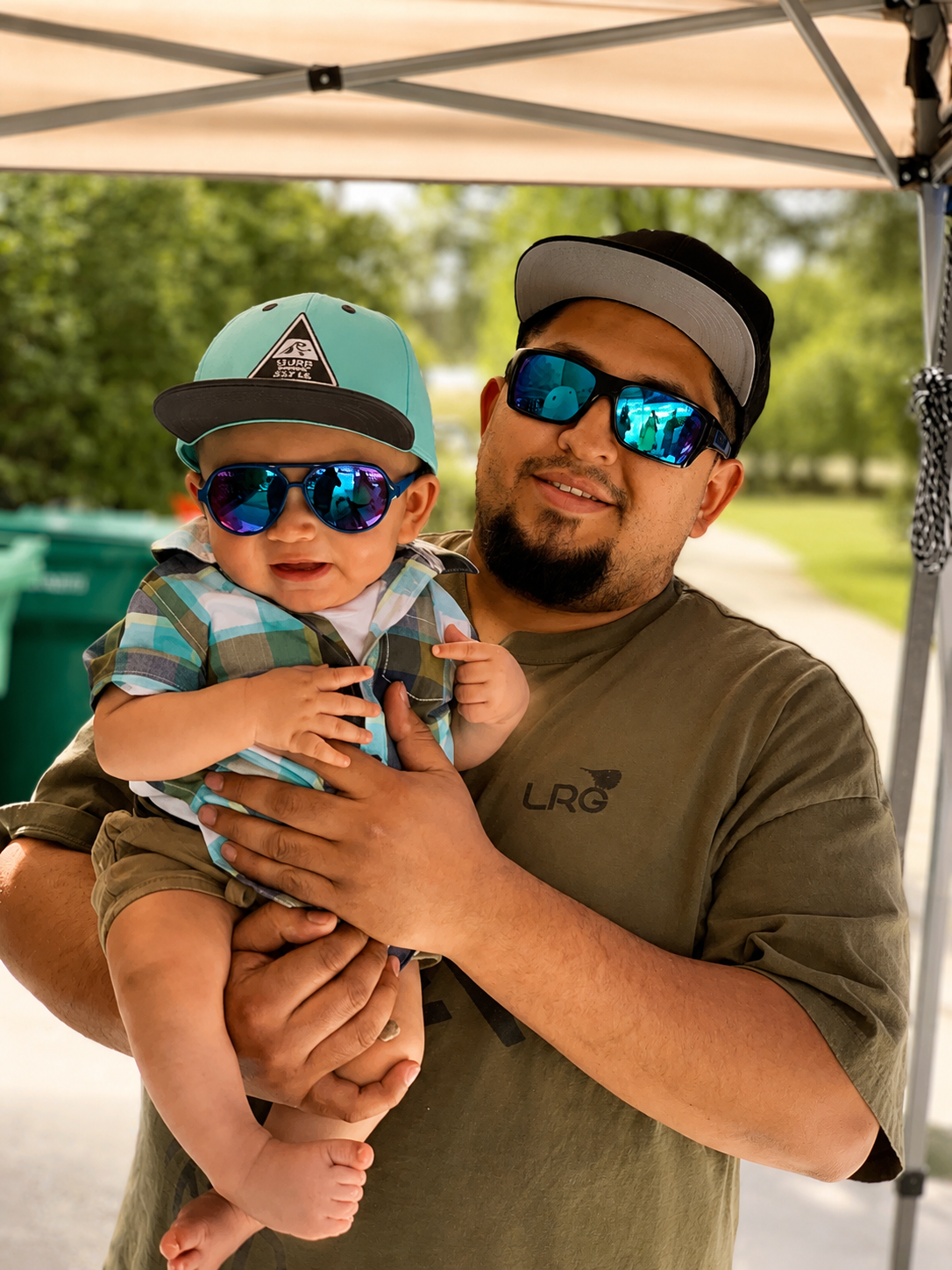
Allan's brother smiling while holding a baby outdoors

MY BROTHER.

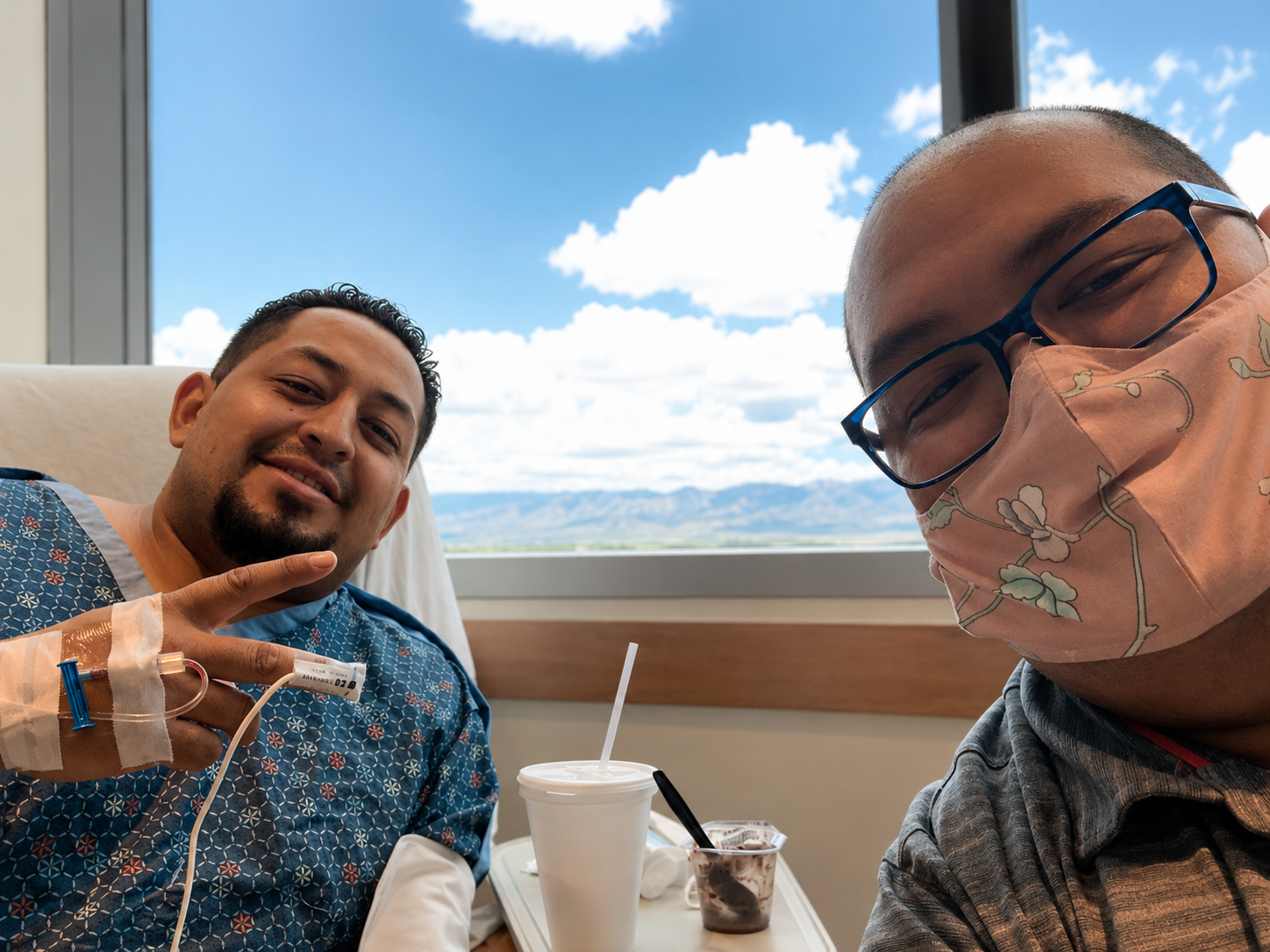
Allan's brother in a hospital bed preparing for stem cell donation with Allan beside him

MY DONOR.

I wouldn’t be standing here without him.

THE TUBE ISN'T THE PATIENT.

THE NUMBER ISN'T THE PATIENT.

THE GUIDELINE ISN'T THE PATIENT.

They're tools we use to take care of one.

58,000 /µL

MONDAY

WHAT IF SHE HAD ONLY ORDERED THE H&H?

WHAT AM I MISSING?

GO WITH WHAT YOU KNOW.

— Michelle Dubon

When something doesn't fit,

go back to the last thing you KNOW is correct.

THE BEST BLOOD BANKERS AREN'T THE PEOPLE

WHO NEVER GET SURPRISED.

THEY'RE THE PEOPLE WHO KNOW WHAT TO DO

WHEN THEY ARE.

WHAT ALMOST GOT AWAY FROM YOU?

A result that didn't fit.

A history that changed everything.

A process that failed.

A case you still remember.